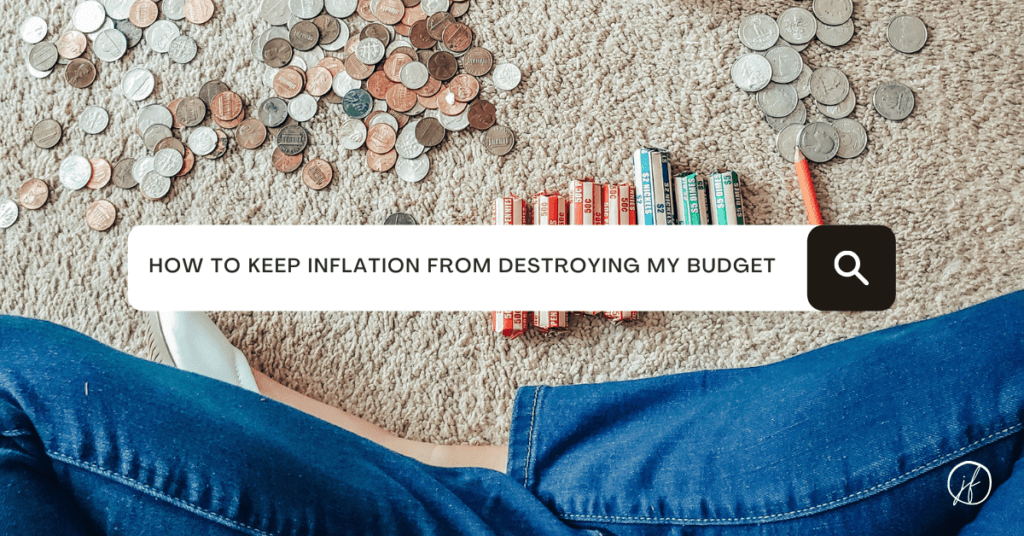

We’re halfway through the year, and if it feels like your money isn’t going as far as it did in January, you’re not imagining things. Prices for everyday essentials have continued to rise, and many families are feeling the financial strain.
Now is the perfect time for a mid-year budget check-up. Think of it as a tune-up for your finances: a chance to realign your spending, plug any leaks, and refocus on your money goals—before the second half of the year gets away from you.
Ready? Let’s walk through a step-by-step reset together.
Step 1: Revisit Your 2025 Money Goals
Ask yourself:
What financial goals did I set in January?
Are those goals still realistic based on today’s prices?
Have any new priorities come up?
Perhaps your emergency fund goal needs to be adjusted. Or maybe you’ve had to pause extra debt payments to cover higher living costs. That’s okay—adjusting is smart, not failing.
➡️ Action step: Update your top 1–3 financial goals for the remainder of the year. If you didn’t set any goals at the beginning of the year, now is a great time to make them!
Step 2: Review the Last 60 Days of Spending
Pull up your bank and/or credit card statements and look at your real numbers—not just what you thought you spent. Grab different colored highlighters (or colored pencils) and highlight like transactions. Then add up all transactions based on their color. Yes, I am suggesting you actually print off your statements to do this. The reason is that you will be able to better “see” where your money has been going all at once, versus having to scroll forever on your phone.
Look for:
Surprise expenses or creeping subscriptions
Categories consistently over budget (like groceries or gas)
Non-essentials you can cut or pause
➡️ Action step: Identify three spending areas to adjust immediately.
(Example: lower takeout spending, cancel unused apps, reduce impulse buys.)
Step 3: Adjust Your Budget for Inflation
If grocery or utility costs are up by $100/month but your budget hasn’t changed, it’s no wonder you feel behind.
Take a moment to update:
Grocery & household essentials
Utilities (electric, water, internet)
Gas & transportation
Insurance premiums (car, health, home)
Then rebalance your budget by reducing or pausing lower-priority categories (like subscriptions, entertainment, or shopping).
➡️ Action step: Reallocate funds to cover increased essentials without dipping into savings. Another thing to consider is whether you have the funds in your home maintenance budget to upgrade your home and reduce your utility expenses (such as adding insulation in your attic, cleaning your AC unit’s coils, or having your HVAC system tuned up).
Step 4: Audit All Recurring Payments
Inflation makes it extra important to trim the fat. And no, it’s not easy, but it can be necessary.
Look at:
Streaming services
Fitness or app subscriptions
Insurance premiums (can you shop around?)
Cell phone or internet plans (call and negotiate! or switch to a different provider. I’ve had Mint Mobile for years and LOVE them – and my $30 a month phone bill)
➡️ Action step: Cancel at least one subscription and price-shop one recurring bill.
Step 5: Check on Your Emergency Fund & Savings Plan
Rising prices mean unexpected expenses feel even more stressful. Make sure you’re still setting aside money—even if it’s less than before.
Do you have at least 1–3 months of expenses saved?
Is your savings in a high-yield savings account? If not, open up a HYSA this weekend – this is the account we use for our Emergency Fund. You only need $100 to open the account.
Are you making automatic transfers?
➡️ Action step: Set or update an auto-transfer for your emergency fund—even $20/week adds up.
Step 6: Refresh Your Budget Format (If Needed)
Is your current budgeting method still working for you?
If not, consider:
Switching from monthly to biweekly or paycheck budgeting.
Try a zero-based budget if you’re overspending.
Using a new app.
Printing a new budget worksheet to simplify tracking.
➡️ Action step: Choose a budgeting tool that fits your current life stage and income.
A mid-year check-in is your opportunity to take back control. Prices may be up, but so is your awareness. And with that awareness comes the power to adjust, refocus, and finish the year strong.
You don’t need a perfect budget. You need a flexible one.
Start where you are. Tweak what’s not working. And celebrate the progress you’ve made.
OTHER POSTS YOU MAY ENJOY