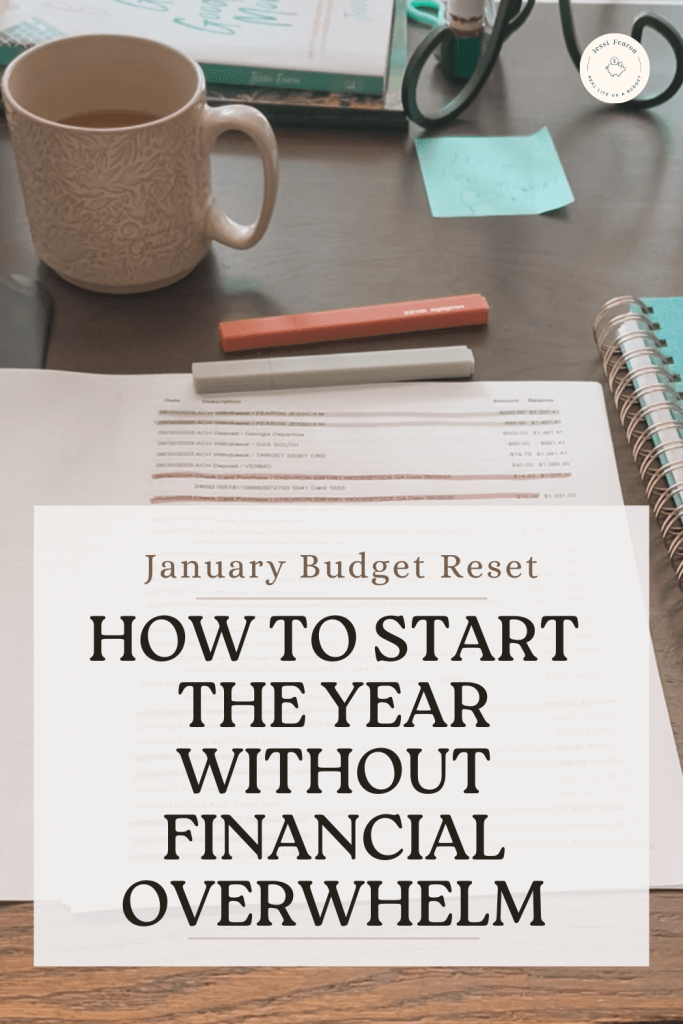
January is when motivation is high—but so is pressure. Many people think they need a perfect budget to start the year right. The truth? You don’t need perfection. You need clarity. A January budget reset helps you understand where your money is actually going, so you can move forward with confidence rather than guilt.
Why a Budget Reset Matters
Most budgets fail because they’re built on guesses. A reset allows you to pause, review recent spending, and make decisions based on real numbers—not wishful thinking.
The January Budget Reset Challenge
Week 1: Review the last 60 days of spending
Here’s the deal. This week, you need to focus on reviewing and understanding where your money has been going. There’s no shame or guilt here. It’s just information that you need in order to course correct and make different decisions going forward.
Week 2: Identify your top 3 spending categories
Again, this isn’t about shame or guilt. It’s about information. In order to set goals that are actually attainable, we need to first figure out our starting point, and by identifying where we spend the most money, it’ll be easier to make changes that help us get closer to achieving our goals.
Week 3: Set one savings goal and one debt goal
This can be $5. For real. You can set up an automatic savings transfer of $5 a week and call it good for now. (Even better if that savings account is a High-Yield Savings Account so you can earn more money while you save!) I know, I know. Folks get upset every time I talk about the $5 savings plan, but here’s the deal – savings add up. It’s just like working out. Using 5lb dumbbells matters, and in time you can move up to 10lbs, then to 20lbs, and so on. But if you attempted to start with 30lb dumbbells and you haven’t worked out in a decade, then you’re probably going to get hurt and set yourself back a lot further in your health journey than if you had just started slow with 5lb dumbbells. Same thing with money. If you don’t already have a habit of saving money and you have very little wiggle room in your budget, just start with $5 and work your way up to increasing that. The key here is to start somewhere and to keep going.
Week 4: Adjust categories to reflect real life
Does your grocery budget need to increase because your once little boys are now teenagers, eating you out of house and home? Or does your grocery budget need to decrease because those teen boys have now grown up into grown men with houses of their own? The point here is to look back, reflect on prior challenges, and be realistic about where you need to adjust your spending to align with your actual life and season.
Common Mistakes to Avoid
- Trying to cut everything at once
- Forgetting irregular expenses
- Giving up when the numbers feel uncomfortable
Long-Term Impact
This reset lays the foundation for every financial decision you’ll make this year. Awareness creates control—and control creates peace.
Want to save big this year? Join our $5k savings challenge here!
P.S. These are the Budget Binder Printables that I’ve used for over a decade to help us manage our money.