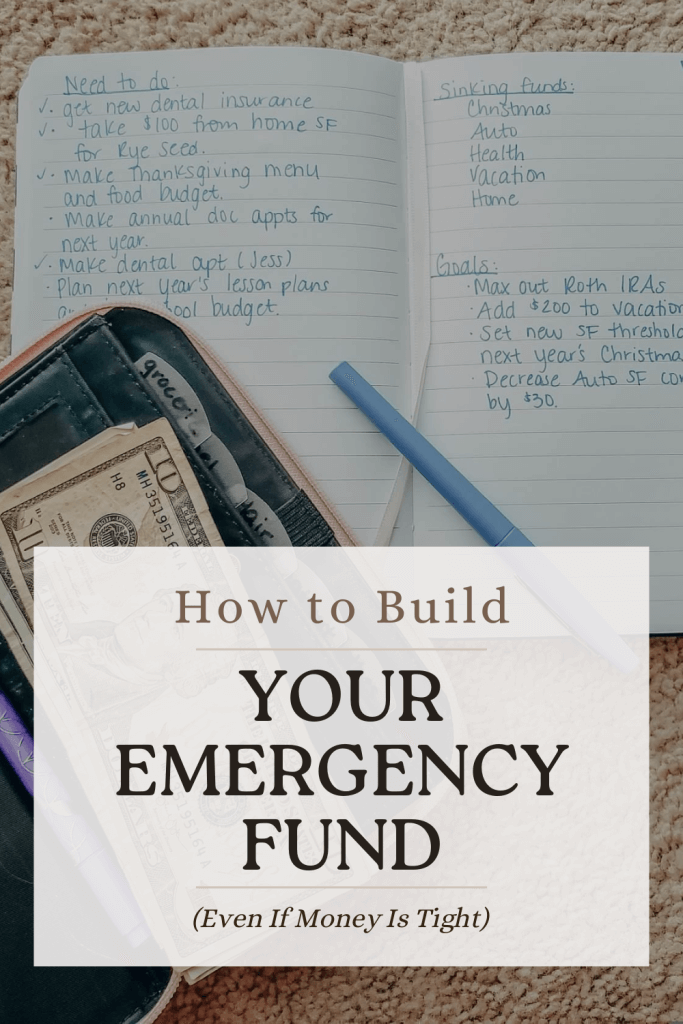
March is the perfect month to boost the savings account with an emergency fund challenge.
The holidays are long gone. Tax refunds are starting to show up (haven’t started on taxes yet? Head here.). And most families are settling into the reality of what this year actually looks like financially.
If you’ve ever thought:
- “We’ll save when things calm down.”
- “There’s just nothing left to save.”
- “We’ll start after we pay off more debt.”
Friend, this is your month.
Building an emergency fund isn’t about having extra money.
It’s about building protection before the next unexpected expense shows up.
And it will show up.
Why an Emergency Fund Is Non-Negotiable
Without savings, every inconvenience becomes a crisis. Trust me, I know. I’ve lived this reality before and it’s not fun.
- Car repair? Credit card.
- Medical bill? Stress.
- Job hours cut? Panic.
- Home repair? Borrowing.
An emergency fund creates space between you and chaos. It creates a margin where there was no margin before. It gives you room to breathe.
It turns “Oh no” into “We’ve got this.”
That peace is worth prioritizing.
How Much Should You Save First?
If you’re just starting, aim for a $1,000 starter emergency fund.
It doesn’t solve everything—but it prevents most short-term emergencies from becoming debt.
Once that’s in place, your next goal is 3–6 months of expenses.
But don’t let the big number intimidate you.
March is about momentum. Just build one month at a time.
The March Emergency Fund Challenge Plan
This isn’t about extreme cutting or burnout.
It’s about steady progress. Here’s your game plan for building up your Emergency Fund this month! (Want more money goal ideas for the month of March? Head here.)
Week 1: Set a Realistic Savings Goal
Start by choosing a number that feels doable.
Examples:
- $25 per week
- $50 per week
- $500 total this month
- Save your tax refund (or a portion of it)
The key is consistency, not heroics.
If your goal feels overwhelming, shrink it until it feels achievable.
Small wins build confidence.
Week 2: Automate What You Can
Automation removes willpower from the equation.
Set up:
- Automatic weekly transfer to savings
- Direct deposit split (if available)
- Round-up savings feature
Even $20 per week adds up to over $1,000 in a year.
You don’t need dramatic moves.
You need consistent ones.
Week 3: Find Hidden Money
Most families have money hiding in plain sight.
Look for:
- Unused subscriptions
- Refunds
- Tax returns
- Facebook Marketplace sales
- Cash-back rewards
- Side gigs for one weekend
Ask yourself:
“What can I temporarily pause to build long-term security?”
This is where many families accelerate progress quickly.
Week 4: Protect the Fund
This is the part most people forget.
An emergency fund only works if it stays intact.
Ask:
- Is this expense a true emergency?
- Is it unexpected?
- Is it necessary?
Emergencies are:
✔️ medical expenses
✔️ urgent car repairs
✔️ job loss
✔️ essential home repairs
Emergencies are NOT:
❌ vacations
❌ sales
❌ birthday gifts
❌ convenience spending
Clarity protects progress.
“But There’s Nothing Left to Save…”
I hear this often.
And sometimes it’s true—your margin is razor thin.
If that’s you, here are three options:
1. Start Tiny
Save $5 per week.
Build the habit before you build the balance.
2. Increase Income Temporarily
One babysitting weekend.
One overtime shift.
Selling a few unused items.
Short bursts of income can jumpstart your fund.
3. Decrease One Category
Pause eating out for two weeks.
Cut one streaming service.
Redirect the savings immediately.
It’s rarely about having no options.
It’s about choosing one small step.
Why March Is the Perfect Time
March works beautifully for an emergency fund boost because:
- Tax refunds often arrive.
- Motivation from January is still lingering.
- Summer expenses are coming.
- It’s early enough in the year to build serious momentum.
Imagine going into summer with savings instead of stress.
That’s powerful.
What Happens When You Have an Emergency Fund
Something subtle shifts.
You stop feeling behind.
You stop fearing the mail.
You stop panicking when the check engine light turns on.
And instead of reacting to life, you start leading it.
That confidence carries into:
- debt payoff
- long-term investing
- business growth
- household planning
Security changes behavior.
Common Emergency Fund Mistakes to Avoid
❌ Keeping It in Checking
Too easy to spend.
❌ Investing It in the Market
Emergency funds need stability, not risk.
❌ Waiting Until Debt Is Gone
You still need a starter fund first.
❌ Giving Up After One Setback
If you use it, rebuild it. That’s the system working.
Where Should You Keep Your Emergency Fund?
Look for:
- High-yield savings account (this is the account we have and love!)
- Separate from daily spending
- Easily accessible (but not instant)
Accessibility without temptation is ideal.
The Bigger Picture
An emergency fund is more than a savings account.
It’s a declaration:
“We’re not living in survival mode anymore.”
Even if it takes months.
Even if it grows slowly.
Even if it feels small at first.
March is about building that foundation.
If you want to join our $5,000 savings challenge – sign up here (it’s FREE)!