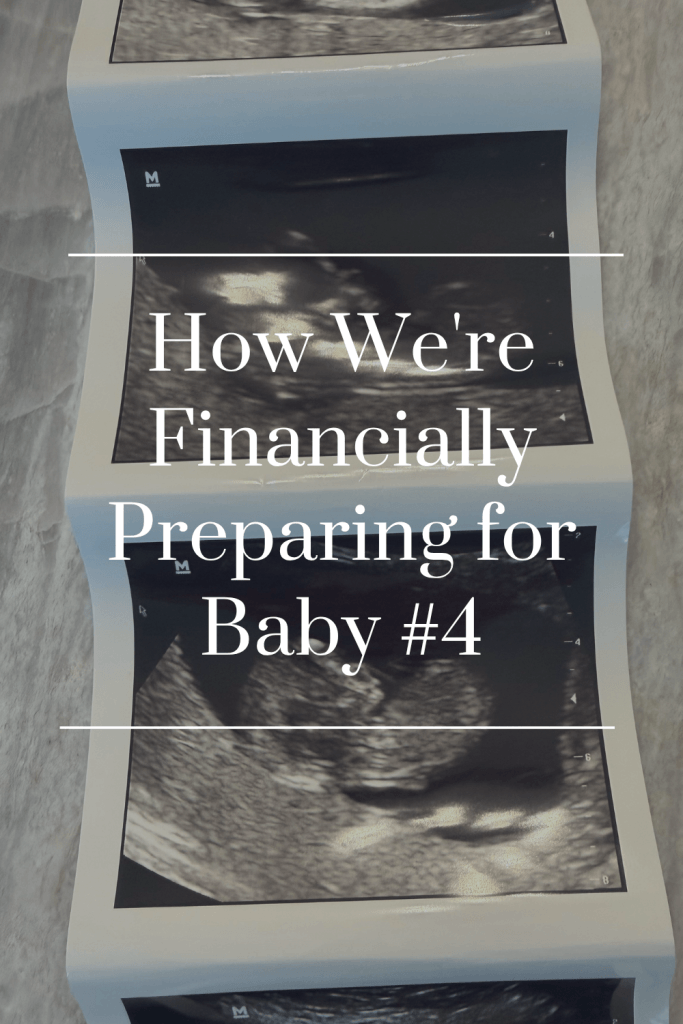
Preparing for a baby is a little different when you haven’t done it in 11 years. (And yes, if you’re new here, my husband and I suffered through secondary infertility for a decade.)
When we found out we were expecting baby number four, there were obviously a million emotions involved. Excitement. Surprise. A little bit of Oh my goodness, we’re really doing this again.
And then, because I’m me, eventually came the spreadsheets.
It’s been more than a decade since we’ve had a newborn in our house, which means we aren’t exactly pulling totes of baby clothes and gear out of the attic. In a lot of ways, we’re starting over. Well, we are completely starting over.
But our financial situation is also very different than it was when we welcomed our first three babies.
We’ve learned a lot about money over the years. We’ve paid off debt. We’ve built savings. We’ve learned how valuable sinking funds can be. And, maybe most importantly, I’ve learned that preparing financially doesn’t mean predicting every expense perfectly.
It means creating enough margin that the unexpected doesn’t automatically become an emergency.
So here’s what we’re doing to financially prepare for baby number four.
1. I’m Tracking Our Medical Expenses—Every Single One
This has probably been the biggest piece of our baby budget so far.
Unlike most families, we don’t have traditional health insurance.
We’ve used a healthcare sharing ministry for years, which I’ve written about before. Because a healthcare sharing ministry isn’t insurance, our experience with medical bills looks different than it would with a traditional health insurance plan.
That means I’m paying particularly close attention to what we’re being charged, what we’ve paid, what’s eligible for sharing, and what we’ll ultimately be responsible for ourselves.
And pregnancy comes with a LOT of medical expenses.
Prenatal appointments. Labs. Ultrasounds. Provider fees. Hospital expenses. And plenty of little charges that can be difficult to keep track of over nine months.
I’ve actually been using my Budgeting for Baby spreadsheet to track our expenses. Since we’re classified as self-pay, we have to pre-pay for expenses, including our hospital delivery and stay.
I originally created it to help expectant parents prepare for the financial side of having a baby, but now I’m using my own spreadsheet to track the real medical expenses for baby number four.
And I love having everything in one place.
Instead of wondering:
Did I pay that bill?
Was that included in the maternity package?
How much have we spent so far?
What do we still expect to pay?
I can actually see the numbers.
And when you’re dealing with multiple providers and bills over the course of a pregnancy, that’s incredibly helpful.
2. We’re Planning for Medical Costs Differently Because We Don’t Have Traditional Health Insurance
I’ve written an entire post about why we don’t have traditional health insurance and what we use instead, so I won’t rehash the whole story here.
But this pregnancy has certainly made our choice more interesting.
Healthcare sharing ministries are not health insurance. That’s an important distinction, and it’s one I’ve always tried to be very clear about.
Because of that, we don’t approach medical expenses with the assumption that we’ll simply pay a copay and everything else will work itself out.
We need cash available.
That’s one of the reasons we’ve maintained a medical fund over the years. Medical expenses are part of our budget—not something we pretend won’t happen until somebody needs a doctor.
With pregnancy, we’re taking that same approach on a much larger scale.
We’re looking ahead at what we know we’ll owe, keeping track of what has already been paid, and making sure we have money available for expenses that aren’t shared or that we may need to pay before reimbursement.
It’s certainly more hands-on.
But I also think it’s made me much more aware of what healthcare actually costs.
Which, as an aside, and because I honestly think the health insurance industry has made the medical world so dang expensive – the hospital I’m delivering at quoted us just over $23,000 to have the baby, but if we pay up front before the end of the year, we only need to pay $5,700! And this isn’t the first time we’ve received this kind of generous discount on our medical expenses for paying up front in cash. I truly don’t know of any other industry that can afford to offer that steep a discount just for paying in cash and still remain in business.
3. We’re Asking About Prices Before the Baby Arrives
This is something I wish more of us felt comfortable doing.
You can ask how much something costs.
Medical care is one of the few places where we’ve somehow accepted receiving services without having any idea what we’re going to be charged.
Whenever possible, I want to know:
What is the self-pay price?
Is there a discount for paying upfront?
What exactly does this fee include?
Will there be separate bills from other providers?
When is payment actually due?
Does something I’ve already paid count toward the larger maternity fee?
I’m keeping records of those answers, too. As well as trying to keep all billing/payment info and questions communicated through email. I’ve learned the hard way that not having a written record of what was said can come back to bite you. So most of my communication with the various billing departments is done through email, so I have a record of what was said and agreed upon.
Because even if you do have traditional health insurance, I think this is worth doing.
Insurance doesn’t make healthcare free. Deductibles, coinsurance, out-of-network providers, lab work, and other expenses can still leave families with significant bills.
Knowing what’s coming gives you time to prepare for it.
4. We’re Separating Baby Needs From Baby Wants
Here’s where having three older kids is probably helping me.
I know how little a newborn actually needs.
That doesn’t mean I’m immune to adorable baby things. I’m pregnant, not superhuman.
But I’m trying to be thoughtful.
There’s a huge industry built around convincing expectant parents that they need approximately 4,732 items before they’re qualified to bring a baby home.
We don’t.
Our baby needs a safe place to sleep. A car seat. Clothing. Diapers. Feeding supplies. Basic care items.
And, most importantly, parents who love and care for them.
Everything else gets evaluated individually.
Will this genuinely make life easier? Will we use it enough to justify the cost? Can we borrow it? Can we buy it secondhand? Is this something we should buy new for safety reasons? Or do I just want it because Instagram showed me a beautifully organized nursery?
Those questions are helping me keep our baby spending grounded in reality.
5. We’re Starting Over—But We’re Not Buying Everything at Once
One disadvantage of an 11-year age gap is that we don’t have any baby stuff anymore. For real, we have absolutely no baby stuff at all.
One advantage?
We have time.
There’s no reason to buy an entire nursery in one weekend. Instead, I’m spreading purchases throughout the pregnancy, and I’m blessed enough to have amazing friends who are throwing me a baby shower (which will be made up of mostly second-hand hand-me-downs from other friends and family members because second-hand is my favorite!).
That makes it easier on our monthly cash flow and gives me time to shop sales, compare prices, buy certain things secondhand, and figure out what we actually want.
It also keeps me from panic-buying.
Our budget doesn’t need to absorb the entire first year of baby’s life before the baby is even born.
6. We’re Making Room in Our Monthly Budget for Another Person
This is the part of budgeting for a baby that I think gets overlooked.
The one-time purchases aren’t necessarily what changes your finances the most.
It’s the recurring expenses.
Diapers.
Wipes.
Formula, if needed.
Clothing as they grow.
Medical expenses.
Eventually food.
Childcare for families who need it.
And all the other little expenses that slowly become part of everyday life.
Instead of only asking, “How much money do we need before the baby comes?” we’re also asking:
What will our monthly budget look like once we’re a family of six?
That’s a very different question.
A $300 baby purchase happens once.
An extra $200 or $300 in recurring monthly expenses changes your budget every single month.
So we’re intentionally creating room now rather than waiting until those expenses arrive. We’re creating mock budgets to help us look over potential changes in our expenses and figure out what works best for us.
7. We’re Keeping Our Emergency Fund an Emergency Fund
This one is important to me.
Having a baby is not an emergency.
We know the baby is coming.
We have months to prepare.
So, as much as possible, I don’t want normal pregnancy expenses, baby purchases, or expected medical bills coming out of our emergency fund.
That’s what sinking funds and intentional budgeting are for.
Of course, childbirth and pregnancy can bring genuine emergencies. That’s precisely why I want our emergency savings sitting there untouched if we need it.
Preparing ahead gives us a better chance of keeping it that way.
8. I’m Giving Ourselves Permission Not to Have Every Number Figured Out
This may be the hardest one for me.
I like numbers. I like knowing exactly what something will cost and exactly where the money will come from. Pregnancy isn’t particularly cooperative with that personality trait. There are things I can’t predict. I don’t know exactly what our final medical expenses will be. I don’t know exactly what the baby will need. I don’t know whether feeding will go according to plan. I don’t know what unexpected expenses will pop up between now and bringing our baby home.
And that’s okay.
Financial preparation isn’t about eliminating uncertainty.
It’s about creating margin for uncertainty.
A Baby Doesn’t Need a Perfect Financial Plan
If you’re reading this while preparing for your own baby and your finances aren’t exactly where you’d hoped they’d be, I don’t want this post to make you feel like you need thousands upon thousands of dollars sitting in the bank before you’re “ready.”
Babies have a funny way of reminding us how little control we actually have.
You don’t need a perfect budget.
You don’t need the perfect nursery.
You don’t need every baby gadget.
And you certainly don’t need to predict every expense down to the penny.
But I do think there’s tremendous peace in looking at your finances honestly and asking:
What can we do today to make the next several months easier?
Maybe that’s saving $50 from every paycheck.
Maybe it’s calling your insurance company and figuring out your maternity benefits.
Maybe it’s asking your hospital for an estimate.
Maybe it’s starting a medical sinking fund.
Maybe it’s buying diapers a little at a time.
Or maybe it’s simply sitting down and figuring out where your money is going.
For us, preparing financially for baby number four looks different than it did with our first baby.
We’re older. Our finances are different. Our family is different.
And after 11 years without a newborn, I’m pretty sure we’re going to feel like first-time parents all over again in plenty of ways.
But this time, I’m bringing a spreadsheet.
And somehow, that makes me feel at least a little more prepared.